Written by Lily Crossley-Baxter
 Researched by Aarohi
In Osaka, autumn leaves transform the busy city, temple precincts, nearby mountains, and beyond into a pleasing mélange of sunny yellows, golden browns, and deep reds.
Osaka is a great city to explore in autumn. While some spots are day-trip destinations or hiking adventures, you can also pick from more central options if you’re short on time. Walking down Midōsuji Avenue or visiting the castle are perfect ways to check out Osaka’s fall foliage displays, even on a tight schedule.
Osaka autumn forecast 2026: When is the best time to go?
For 2026, autumn leaves in Osaka are expected to peak between late November and early December, depending on the exact location and elevation. The latest forecast from the Japan Meteorological Corporation, updated November 4, puts the city’s red leaves at around December 6 and the ginkgo yellows at around November 27 — about five days behind the usual dates, which the forecaster still counts as roughly average.
Higher altitudes and the outskirts will experience peak color changes earlier, with urban spots like Osaka Castle and Midōsuji Avenue usually peaking later in the season.
Pro tip: Check out our all-Japan autumn leaves forecast and the top spots to visit while you’re traveling Japan in the fall season.
1. Osaka Castle
10-minute train ride from Osaka Station¥200 for Nishinomaru Garden (closed Mondays); ¥1,200 for the castle tower

The sightseeing spot that just keeps on giving, Osaka Castle has hundreds of cherry trees that transform the surrounding Nishinomaru Garden into an autumnal beauty spot. Meanwhile, rows of golden ginkgo trees line the paths leading to the iconic castle tower, including a giant in front of the tower that is thought to be around 300 years old.
While enjoying the colors from ground level is pretty satisfying, a trip up the tower offers a vista of the whole city.

Students: ¥600
2. Tsurumi Ryokuchi Park
About 25 minutes by train from Osaka Station (change at Kyōbashi); the station is right by the park entranceFree
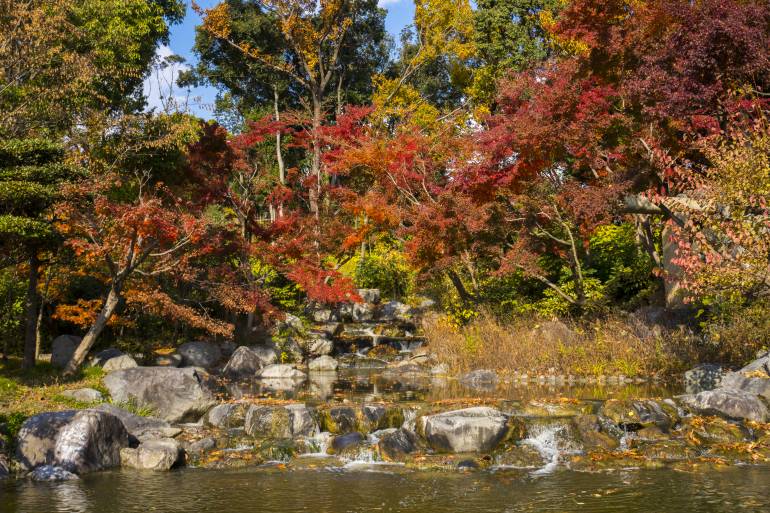
Tsurumi Ryokuchi Park in northeastern Osaka is a relaxed, spacious spot that shines in autumn. Once the site of Expo ’90, it still has that mix of open lawns and themed gardens, but by late October the mood shifts as cosmos bloom around Windmill Hill (they’re cleared away by mid-November) and ginkgo and maple trees start to turn.
By mid-November, the tree-lined paths, ponds, and small mountain area are brushed with red and gold, while the rose gardens give one last show before winter.
3. Hoshida Park Suspension Bridge
45-minute train ride from Osaka Station, and then a 40-minute hike from Kisaichi StationFree

Located in a quasi-national park, the Hoshi no Buranko (meaning “Star Swing”) is possibly one of the most stunning autumn viewpoints in the whole of Japan, let alone Osaka. Offering views across the 105-hectare park, the largely wooden suspension bridge is 50 meters high and allows you to look down across the trees (assuming you’re not scared of heights, of course).
The park is home to multiple hiking trails and a 16.5-meter artificial climbing wall, so there are plenty of ways to experience the foliage.

4. Daisen Park
30-minute train ride from Osaka Station¥200 for Japanese Garden

Home to one of Japan’s top 100 gardens, Daisen Park is a popular autumn spot as it combines clever landscaping with deep-red leaves. The garden has a small teahouse where you can try seasonal sweets and green tea, while enjoying the view.
Autumn night openings: The Japanese garden lights up its maples and stays open until 9 p.m. (last entry 8:30 p.m.) on November 14, 21–23, and 27–29, and December 4–6, 2026. Evening entry is ¥500 for adults (including the regular garden fee) and ¥100 for kids.
5. Expo ’70 Commemorative Park
35-minute train ride from Umeda StationPark entry is ¥450, which covers both the Natural Culture Garden and the Japanese Garden; kids of junior-high-school age and under get in free

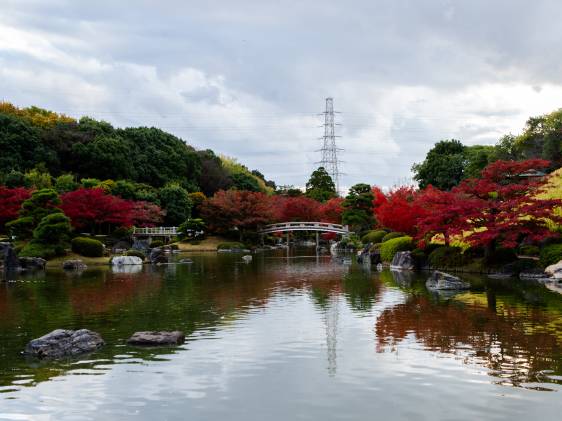
Known as Banpaku Kinen Kōen in Japanese, this large park hosted the pavilions of the Japan World Exposition in 1970. Featuring miniature forests, manicured lawns, a Japanese garden, thousands of cherry trees, and the Momiji Waterfall, it’s a great place to view the autumn leaves.
Autumn Leaves Festival: From November 7 to 29, 2026, the park hosts its Autumn Leaves Festival, with special openings of the Japanese Garden teahouses, matcha with a garden view, guided taxi tours, and weekend pop-ups. Viewing the teahouses is included in park entry, but the matcha set (¥900) and taxi tours (¥1,000 per person) cost extra.
Pro tip: Stroll along Sorado Promenade for views of the waterfall as the maple leaves turn red. The park usually closes on Wednesdays, but it’s open every day in October and November. Also, take a photo in front of the famous Tower of the Sun statue by Taro Okamoto.

6. Minō Falls and Katsuō-ji Temple
30-minute train ride from Umeda StationFree for Minō Park; ¥500 for Katsuō-ji Temple

One of the most popular destinations for an afternoon out in Osaka, Minō Park offers a gentle hike along a river, with a few bonus spots along the way. Ending in a picturesque view of Minō Falls, complete with a small bridge (and probably lots of people), the walk is about 3 km long. There are loads of shops and eateries along the way too — be sure to try the fried momiji (maple) leaves, a local autumn specialty.
About 20 minutes by bus from the park, Katsuō-ji is a sprawling temple known for its links with daruma (round, red good-luck dolls — you paint in one eye when you make a wish, and the other when it comes true).
Katsuō-ji opens in the evening for illuminations on weekends and holidays in November 2026 (last entry 8 p.m.). If you’re driving, note that its car park is reservation-only on weekends and holidays.
Minō hosts a momiji festival from mid-November to early December (November 14 to December 6 in 2026), with evening illuminations along the trail to the falls, forest yoga, and a stamp rally.

7. Ushitakisan Daiitoku-ji Temple
26-minute train ride from Namba Station, then a 50-minute bus trip from Kishiwada Station to Ushitaki Onsen and a 10-minute walkFree

An area of mountains well known for autumn foliage, Ushitakisan is home to Daiitoku-ji — a temple said to have been founded by En no Gyōja, the legendary founder of Shugendō mountain asceticism. Its two-story Tahōtō pagoda, built in 1515, is a national Important Cultural Property.
Framed with the colors of fall, the pagoda, bell tower, and Daishidō hall all make for stunning views. And although it’s at the end of a pretty long bus journey, it’s worth it. The Ushitakisan Momiji Festival, usually held in late November, adds stalls selling local Senshū produce.
There is a maple-lined avenue to stroll down, and the beautiful Kinryū Falls are nearby.
Pro tip: The Ushitaki Onsen bus stop is also where you’ll find Ushitaki Onsen Shiki Matsuri, a hot-spring complex with outdoor baths (day entry ¥750 for adults), if you fancy a soak after your temple visit.

8. Midōsuji Avenue
2-minute walk from Shinsaibashi StationFree

A 4 km stretch of unusually wide road, Midōsuji Avenue is lined with ginkgo trees and transformed into a golden haven every autumn. Located in Shinsaibashi, the avenue features high-end stores and boutiques, and is also a romantic place for a stroll in the evening.
Nicknamed the Champs-Élysées of Japan, Midōsuji Avenue has nearly 1,000 ginkgo trees and is an easy-to-visit autumn spot right in the heart of Osaka.

9. Mount Kongō
30-minute train ride from Namba Station, then a Nankai bus from Kawachinagano Station to the Kongōsan (Fushimi-tōge-guchi) stopFree
On the prefectural border with Nara, Mount Kongō is Osaka’s tallest mountain and is popular in winter for its ice trees (juhyō), but also has some impressive fall foliage. Part of the Kongō Katsuragi range, the peak is 1,125 meters tall and home to castle ruins, temples, and shrines, as well as plenty of hiking routes for all levels.

10. Kyūan-ji Temple
35-minute train ride from Osaka Station and then a 15-minute bus from Ikeda Station¥300

Kyūan-ji Temple is one of the most popular spots to enjoy fall leaves in northern Osaka.
The ancient temple is known for its traditional and long-lasting buildings, as well as its maple leaves, which enhance the already beautiful gardens. Be sure to see the pagoda, bell tower, and ancient trees — and if you have time, try the forest-bathing course.
Kyūan-ji also has its own autumn leaves festival, held on November 23 (Labor Thanksgiving Day, a Monday this year). Expect sutra-reading rituals, a big outdoor fire ceremony, and a mochi toss.

11. Settsukyō Gorge
20-minute train ride from Osaka Station, 15-minute bus ride from Takatsuki Station to Tsukawaki, then a 10-minute walkFree
Located in the upper-mid section of the Akutagawa River basin, Settsukyō Gorge is a scenic area in the Osaka/Hokusetsu region. It spans 42.65 hectares of mountains and forests. It’s a year-round beauty, with cherry blossoms in spring and red leaves in autumn.
There are five hiking trails within the park, but the mountainside forest trail is particularly stunning in autumn. This trail takes you through a valley of maple trees, and you’ll encounter a 15-meter waterfall midway through your hike.
If you prefer something a bit different, the ravine course allows you to stroll along the bank of a clear river, admiring the park’s famous rock formations.
Pro tip: Settsukyo Hananosato-onsen Sansuikan, a hot-spring ryokan with outdoor baths, is nearby as well.
12. Bonus: Mount Kōya
About 1.5–2 hours by train (express and local options) from Namba StationFree to explore; ¥1,000 for Kongōbu-ji Temple
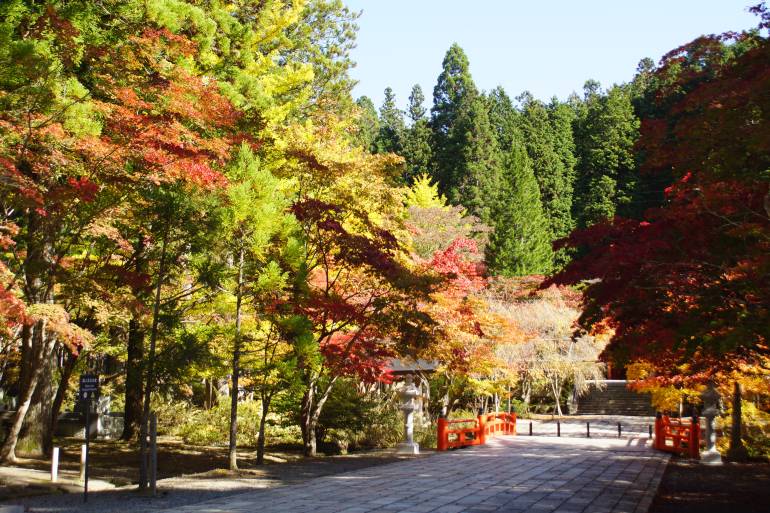
So, Mount Kōya is actually in Wakayama, but we’re listing it here because it’s very accessible from Osaka.
Mount Kōya is among the most spiritual places in all of Japan, and it’s the heart of Shingon Buddhism. Over a thousand years since its founding, its forested plateau is home to sacred sites like Kongōbu-ji, the sect’s head temple, and Okunoin, where Kōbō Daishi is said to rest in eternal meditation.
While beautiful year-round, autumn (October–November) is by far the most magical season to visit. The temple gardens and cedar-lined paths blaze with crimson, gold, and amber leaves.
Pro tip: If you don’t want to bother with figuring out train times and interchanges, consider a bus tour of Mount Kōya. It’s a guided day trip from Osaka that includes a vegetarian lunch, admission to Kongōbu-ji and other key sites, and a stop at Kishi Station — famous for its cat stationmasters — along the way.
While we do our best to ensure it’s correct, information is subject to change. Post first published in October 2018. Last update: November 2026, by the editorial team.